



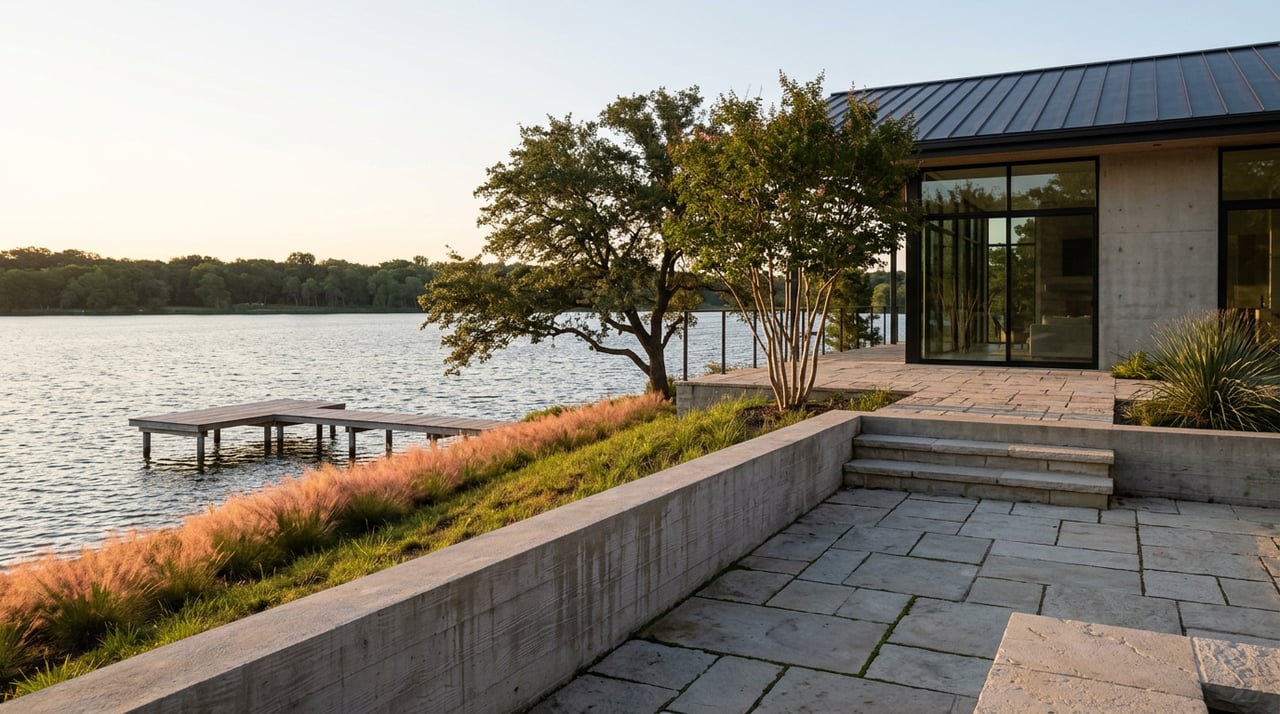
On October 12, the water along Lake Austin's shoreline will start to disappear. Not dramatically, but gradually over the weeks that follow. Bulkheads that have stayed underwater since before some current owners bought their homes will see daylight for the first time since 2017. If you bought your Rob Roy or Lake Austin waterfront property any time in the last nine years, you have never seen this lake at this level.
That's the part worth sitting with before we talk about docks and permits and price. Lake Austin's entire waterfront pitch rests on the word constant. Unlike Lake Travis, which rises and falls with drought and rainfall and flood control decisions, Lake Austin is held steady, and that steadiness is a real part of what buyers pay for. But steady isn't the same as permanent. It's a policy choice, made and remade by the Lower Colorado River Authority and the City of Austin, and this fall it's being set aside on purpose. Understanding why, and what it exposes, is the difference between treating this drawdown as neighborhood trivia and treating it as the best due-diligence window Rob Roy buyers have had in years.
The Premium You're Actually Paying For
Ask any agent who works Lake Austin waterfront why it commands more than a comparable lot on Lake Travis, and the answer starts with the water itself. Lake Austin holds a constant level, which means a dock built at the right height stays usable every day of the year. There's no receding shoreline in a dry summer, no exposed mudflat where a boat ramp used to be. That reliability, paired with a downtown commute that runs ten to twenty five minutes from most Rob Roy addresses, is a large part of why the lake's estate-scale properties routinely clear seven figures and why compound-style parcels on the Rob Roy Peninsula can run into eight.
Another factor for buyers is the lake's management history. Lake Austin's constant level isn't a feature of the lake. It's a management decision LCRA revisits every few years, and the historical record shows it has changed direction more than once. Drawdowns were routine in the early 2000s, happening eight times between 2001 and 2011 as the city tried to knock back invasive aquatic vegetation. Then the practice nearly stopped. Only one drawdown occurred between 2011 and this year, back in 2017. The current one, running October 12 through November 30, 2026, is the first in nine years, and it exists because shoreline property owners asked for it and the city agreed the maintenance backlog had become worth the disruption.
The lake will drop to a target range of 481.8 to 482.8 feet above mean sea level, roughly ten feet below normal, before refilling begins on November 24 using water released from Lake Travis. LCRA has also been explicit that the timing itself is a policy artifact. Winter used to be the default drawdown season, but after Winter Storm Uri in 2021, LCRA stopped scheduling winter drawdowns because the hydroelectric generators at Highland Lakes dams need to stay available during cold weather grid emergencies. Drawdowns now happen in the fall instead, which means the calendar a buyer sees today is not the calendar longtime Rob Roy owners grew up with.
None of this makes Lake Austin waterfront a bad bet. It makes "constant level" a claim with an asterisk, and buyers who understand the asterisk negotiate from a stronger position than those who don't.
The Permit Quirk That Catches Lake Travis Buyers Off Guard
Here's where the mechanism actually bites. According to LCRA, dock and shoreline construction inside Austin city limits runs through the City of Austin's Land Development Code, with site plan review required before a residential building permit and the Austin Parks and Recreation Department fielding dock-specific questions. A buyer should verify which agency governs the property before starting due diligence.
That split matters at closing. Ask whether the dock was rebuilt or altered and request any available permit records before closing.
The lake will be lowered by about 10 feet to provide property owners improved access to docks, bulkheads and boat slips.
That's the City of Austin's own framing for why this drawdown exists at all, and it tells you what the exposed lakebed is really for. It's not a curiosity. It's the only time this decade that a bulkhead crack, a shifted piling, or an undocumented repair becomes visible without a diver.
What a Permitted Dock Is Actually Worth
Ask waterfront specialists who track Lake Austin sales what separates a strong offer from a soft one, and the conversation moves quickly past finishes and square footage to the dock file. A home with a permitted, usable dock in deep water is worth meaningfully more, often by a margin agents describe in the mid six figures, than an identical home with a shallow cove, an undocumented structure, or a permit that doesn't match what's actually built. That gap has nothing to do with the house and everything to do with paperwork most buyers never think to request before the option period ends.
This is where the timing of this fall's drawdown becomes useful rather than inconvenient. The City of Austin says trash and debris removal from the exposed lakebed doesn't require a separate city sign-off and is actively encouraged. The City of Austin says bulkhead repairs within the existing footprint can qualify for a lighter Site Plan Exemption process during the drawdown.
For anyone actively evaluating Rob Roy waterfront this fall, that creates a genuine window. A buyer under contract during the drawdown period can walk the exposed shoreline and see pilings, bulkhead condition, and sediment buildup that would otherwise stay hidden until a diver's report came back weeks into the option period. A seller with shoreline work they've been putting off has a faster permitting path than they'll see again until the next drawdown, whenever that turns out to be.
What to Check If You're Buying or Selling This Fall
- Ask for the complete permit file before the inspection period, not after. On Lake Austin that file lives with the City of Austin, not LCRA
- Order a title commitment and review every exception for terms relevant to shoreline work.
- If shoreline work is planned, get in the queue early. The Site Plan Exemption pathway created for this drawdown will not be accepted after November 2026, and the accelerated review still takes time to process.
- Walk the property while the lakebed is exposed if the timeline allows it. Bulkhead cracks, piling condition, and sediment depth are far easier to assess in person than from a listing photo taken at normal water level.
- Confirm whether the parcel sits inside Austin city limits or unincorporated Travis County. The permitting authority, and the rules that apply, change depending on the answer.
Quick Answers for Rob Roy Buyers and Owners
Will this affect drinking water supply? Refilling Lake Austin after the drawdown draws roughly 13,000 acre-feet of water from Lake Travis, which is expected to lower Lake Travis by about nine inches. That's a routine part of system operations, not a supply concern.
Does the drawdown solve the hydrilla problem? Not by itself. A June 2026 Texas Parks and Wildlife survey found roughly 575 acres of hydrilla and 75 acres of Eurasian watermilfoil in the lake, and the city has acknowledged that past drawdowns haven't reliably controlled hydrilla growth. The city continues a separate grass carp stocking program as its primary long term strategy.
Should I wait until after the drawdown to close on a Rob Roy waterfront property? Not necessarily. The exposed shoreline is an opportunity to see conditions that are normally hidden, which can strengthen a buyer's negotiating position rather than delay it. The right move is asking your agent whether the property's dock and bulkhead documentation supports what you can now see for yourself.
Is this the new normal for Lake Austin? Unclear. The lake went nine years between drawdowns before this one. LCRA and the City of Austin have said future decisions will depend on stakeholder input, permitting capacity, and conditions on the lake, not a fixed schedule.
Lake Austin's value has always rested on the idea that the water stays where you expect it. This fall, for seven weeks, it won't, and that's precisely when the parts of a waterfront purchase that usually stay submerged become visible to anyone willing to look. If you're weighing a Rob Roy or Lake Austin waterfront property this season, DEN Property Group can walk the permit file, the survey, and the shoreline with you before you write an offer. Find Your DEN.®
This article is general information, not legal, tax or financial advice. Consult a qualified professional about your situation.