
By DEN Property Group
Austin has a reputation that precedes it — live music, great food, outdoor living, and a creative spirit that's hard to replicate anywhere else. But scratch beneath the surface and Central Austin reveals a history that's stranger, richer, and more layered than most people expect. Here are some facts about Central Austin, TX, worth knowing.
Key Takeaways
-
Austin was originally named Waterloo before being renamed in 1839 in honor of Stephen F. Austin
-
The city is home to the only surviving moonlight towers in the world, most of them still standing in Central Austin neighborhoods
-
The Texas State Capitol was built from pink granite quarried in nearby Marble Falls and stands 14 feet taller than the U.S. Capitol in Washington, D.C.
-
Barton Springs Pool is fed by approximately 26 million gallons of water daily from the Edwards Aquifer and maintains a nearly constant temperature of 68–70 degrees year-round
The City Has a Different Name in Its Past
Most people know Austin as the capital of Texas, but fewer know that it wasn't always called Austin at all. The city's origins are tied to a naming dispute, a territorial rivalry, and a founding father who never saw his name on the map.
Facts About How Austin Got Its Name and Identity
-
The settlement was originally called Waterloo when it was chosen as the capital of the Republic of Texas in 1839
-
It was renamed in honor of Stephen F. Austin, widely considered the "Father of Texas," who had died two years before the name change took effect
-
Austin served as capital of the Republic of Texas before Texas joined the United States in 1845, making it one of the few American cities to have been a national capital
-
The 1842 Texas Archive War erupted when President Sam Houston tried to relocate government records to Houston and armed Austinites intercepted the convoy and brought them back
Central Austin's identity today — independent, stubborn, fiercely local — turns out to have deep historical roots.
The Moonlight Towers Are One of a Kind
Scattered throughout Central Austin's older neighborhoods, the moonlight towers are easy to walk past without a second glance. That would be a mistake. They are the last surviving structures of their kind anywhere in the world.
What Makes Austin's Moonlight Towers So Remarkable
-
Austin purchased 31 of the 165-foot towers in 1894, originally powering them with carbon arc lamps bright enough to illuminate a 1,500-foot radius — sufficient to read a watch face at night
-
Every other city that once used moonlight tower systems, including Detroit, eventually tore them down as more efficient street lighting replaced them
-
17 of the original 31 towers survive today, and the group was added to the National Register of Historic Places in 1976 — though not all 17 are standing at once, since a couple are periodically pulled for restoration
-
The tower in Zilker Park is transformed each December with 3,159 colored lights into what was historically known as the "World's Tallest Man-Made Christmas Tree"
The first moonlight tower ever erected in Austin went up in Hyde Park in 1894 — and that one is still standing today at the corner of 41st Street and Speedway.
The Capitol Building Holds Its Own Records
The Texas State Capitol on Congress Avenue is one of Central Austin's most visited landmarks, but most people who walk past it don't know the full story behind the building itself.
Capitol Facts That Go Beyond the Obvious
-
The building was constructed from sunset red granite quarried in the 1880s from the town of Marble Falls, roughly 50 miles northwest of Austin
-
At its highest point, the Capitol dome stands 14 feet taller than the dome of the U.S. Capitol in Washington, D.C.
-
The Goddess of Liberty statue atop the dome was given intentionally exaggerated facial features so they'd remain visible and legible from the ground, over 300 feet below
-
Austin law protects 30 designated "view corridors" downtown, preserving unobstructed sightlines to the Capitol from multiple directions across the city
The building was dedicated with a public celebration held May 14–19, 1888, and has anchored the civic and political identity of Central Austin ever since.
The Natural World Here Is Genuinely Rare
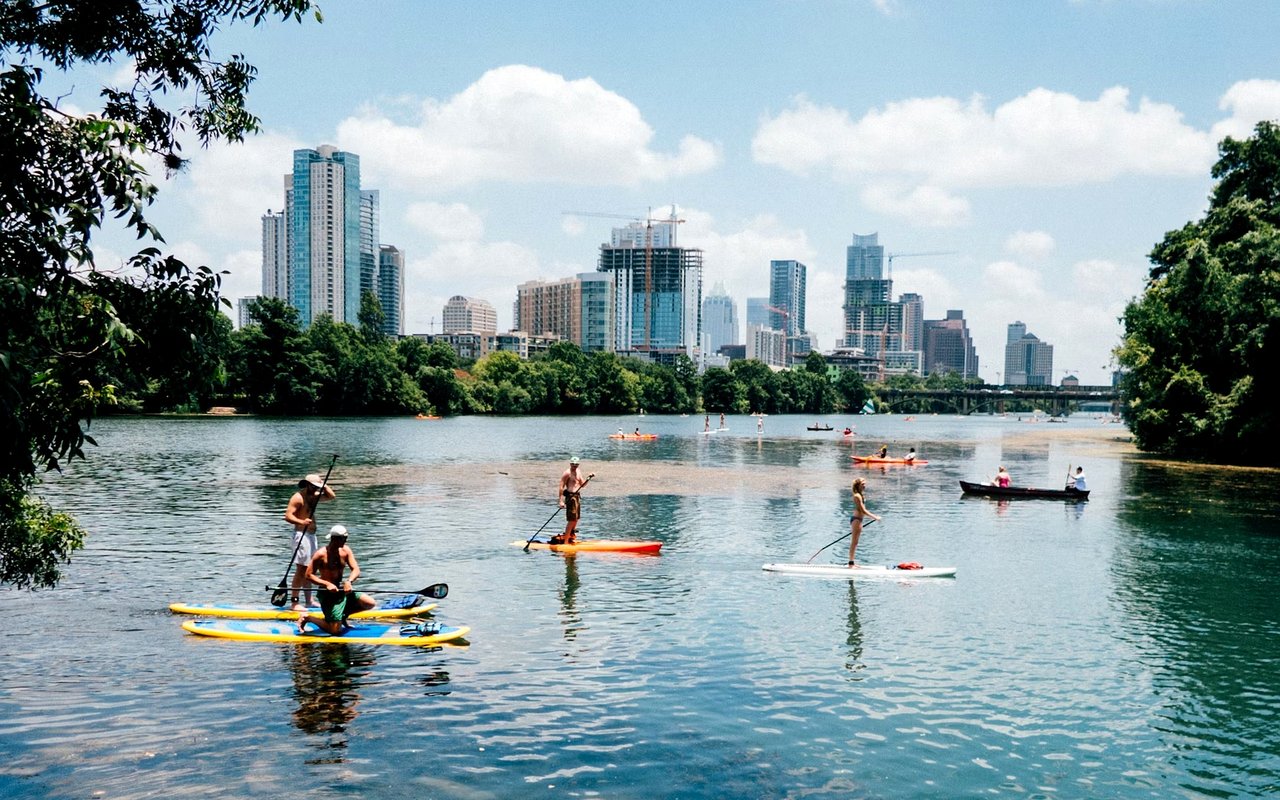
Central Austin's outdoor spaces aren't just pleasant — they're ecologically significant in ways that aren't obvious to the casual visitor or even to longtime residents.
Natural Features of Central Austin Worth Knowing
-
Barton Springs Pool is fed by the Edwards Aquifer at a rate of approximately 26 million gallons per day, keeping the water at a near-constant 68–70 degrees in every season
-
The Barton Springs Salamander, an endangered species found nowhere else on earth, lives exclusively in the Barton Springs portion of the Edwards Aquifer
-
The Congress Avenue Bridge is home to the largest urban bat colony in North America, with up to 1.5 million Mexican free-tailed bats taking flight at dusk from mid-March through October
-
The endangered Golden-cheeked Warbler nests only in the juniper-oak woodlands of Central Texas, making the Austin area one of the few places in the world where it can be observed
Living in Central Austin means living alongside natural systems that exist nowhere else — and that's not a small thing.
FAQs: Facts About Central Austin, TX
What was Austin called before it was Austin?
The settlement was called Waterloo until 1839, when it was renamed in honor of Stephen F. Austin. He had died two years before the name change and never knew the city would bear his name.
Are Austin's moonlight towers still functioning?
Yes. 17 of the original 31 towers survive today and remain the only surviving moonlight towers in the world, though not all are standing at once — a couple are periodically pulled for restoration. Most are located in Central Austin neighborhoods and were added to the National Register of Historic Places in 1976.
Is the Texas State Capitol actually taller than the U.S. Capitol?
It is. The dome of the Texas State Capitol stands 14 feet higher than the dome of the U.S. Capitol in Washington, D.C., and the building was constructed from sunset red granite quarried near Marble Falls, Texas.
Discover Central Austin with DEN Property Group
We are a creative, boutique brokerage built for buyers, sellers, and developers who see Austin the way we do — as a city full of depth, character, and opportunity worth understanding on its own terms. At DEN Property Group, we work with clients who are curious about how they live, where they invest, and what they build.
Our team brings specialized expertise across every corner of the market, from first-time buyers putting down roots in Hyde Park to developers working near the Capitol corridor. We back every engagement with local knowledge, strategic marketing, and a tailored approach designed to turn vision into value.
Connect with DEN Property Group today.
Our team brings specialized expertise across every corner of the market, from first-time buyers putting down roots in Hyde Park to developers working near the Capitol corridor. We back every engagement with local knowledge, strategic marketing, and a tailored approach designed to turn vision into value.
Connect with DEN Property Group today.