
Order a natural wine flight at The Violet Crown on a Saturday afternoon and you're standing in a room that has spent more than seventy years refusing to become anything but a place the neighborhood stops into. Before it poured skin-contact whites and pulled espresso shots, that same storefront on Woodrow Avenue served scoops of ice cream as the Violet Crown Clubhouse. Before that, it filled prescriptions for more than fifty years as Crestview Pharmacy. The address has changed hands and purposes on paper. In practice it has done one job, on repeat, since Eisenhower was in office.
That is the thing about Crestview that a list of good restaurants won't tell you. The neighborhood's Saturday doesn't run on whatever happens to be trending. It runs on a shopping center built in 1950 that has spent three-quarters of a century quietly refusing to let its storefronts become anything other than what the neighborhood needs them to be.
The Address That Won't Let Go
Developers A.B. Beddow and Ray Yates broke ground on Crestview in 1947 and had the west side of their shopping center on Woodrow Avenue open by August 1950. What's happened to that small, two-building complex since is less a history of retail turnover and more a history of the same functions being handed off, generation to generation, without ever actually leaving.
The pharmacy-to-clubhouse-to-wine-bar storefront is one lineage. There's a second, running one address over. Crestview Food Mart opened in 1952, and Herb Prellop bought the grocery store the following year. When Herb became sole owner in 1956, it took the name Crestview Minimax. The grocery later moved into a new addition built onto the west side of the center, and it's been groceries there ever since: Minimax IGA until 2016, then Arlan's Market, then Fresh Plus as of 2025. Three names, three ownership groups, one uninterrupted use going back more than seventy years.
The barbershop tells the same story without even the name changes. It has been cutting hair in the same spot since 1953.
When Chris Nagelhout and Grant Richardson took over the old Violet Crown Clubhouse space in 2023 and turned it into a coffee shop by day and natural wine bar by night, Richardson put the continuity into words when the shop opened, as quoted in Community Impact's report:
"Most important though, this is a space for the neighborhood."
He wasn't describing a new idea. He was describing the only idea that storefront has ever had.
What a Saturday Actually Sounds Like
Here's what that inheritance looks like in practice, on a given Saturday, for someone who already lives three streets over and isn't thinking about any of this history at all.
Morning starts at The Violet Crown, open early for coffee and pastries from Texas French Bread, kolaches from Kerlaches, and doughnuts from Andy K's, before the room shifts into its evening identity as a bottle shop and wine bar. Next door, Little Deli & Pizzeria has been the busiest tenant in the shopping center since it opened in 1992, and the Reuben is the reason most people are in line.
Most months, one Saturday looks different. On the first Saturday, the pull is Top Notch Hamburgers on Burnet Road, the char-broiled burger stand the Stanish family bought and turned into a neighborhood institution starting in 1971. It's the same drive-in that shows up in Dazed and Confused, and it still hosts Hot Rod Drive-In Night on the first Saturday of most months: pre-1971 cars parked nose to curb, a band setting up as the light goes gold, and a classic film once it's dark enough to watch one. It is, structurally, the same idea as the wine bar two miles away. A business built around giving the neighborhood a reason to be in one place together.
Dinner splits two ways depending on the mood. Bartlett's covers the register that wants white tablecloths and the 100-Hour Marinated Rib-Eye. Soha, tucked into a strip mall on West Anderson Lane, covers the register that wants Korean plates and a louder room. Both are a short drive from the shopping center that anchors everything else about the day.
The Sundays Tell the Same Story
The pattern doesn't reset on Sunday. The Violet Crown has run a Sunday Summer Supper Series with a rotating weekly pasta dish from the kitchen, things like basil cavatelli or a beef-and-squash lasagna, served walk-up style in the evening. The shop has also kept a standing oyster night on the menu. None of it requires the space to become a different kind of business. It just requires the same room to keep finding a new reason for the neighborhood to show up.
That's worth sitting with for a second, because it's easy to read a list of businesses and assume the interesting part is the businesses. The interesting part is that none of them had to reinvent the format. They inherited a shape that already worked and filled it with their own version of the same thing.
Why the Building Keeps Winning
Some of that is deliberate. Ray Yates's wife Maude, an avid gardener, once arranged to have the center's large oak tree relocated rather than removed. It still shades the space near Little Deli today. The two buildings were originally connected by a grassy mall with walkways and flower beds, a layout built for lingering rather than just parking and leaving. There's a mosaic on the east side, the Wall of Welcome, that spells out the center's whole philosophy in four words: "Welcome to the neighborhood."
Compare that to how most commercial real estate turns over. A drugstore closes and a vape shop moves in. A diner closes and it becomes a nail salon. The category shifts because nothing about the physical space demanded otherwise. Crestview's shopping center has resisted that pattern for over seventy years, not because the businesses inside it were protected from failure, several of them did fail, but because the built form kept pulling whatever replaced them back toward the same function: feed the neighborhood, gather the neighborhood, do it again next week.
That's a different kind of stability than the kind usually discussed about a neighborhood. It's not about home values holding steady or a school boundary staying put. It's about a single two-acre lot from 1950 that has never stopped being the reason people leave their houses on a Saturday, regardless of which family or franchise happened to be running the register that decade.
If you live in Crestview, you already know the rhythm even if you've never traced it back this far. The coffee, the pizza, the first Saturday burger stand with the movie screen, the wine bar that used to be an ice cream parlor that used to be a pharmacy. None of it is new. All of it is exactly as old as the neighborhood asked it to be.
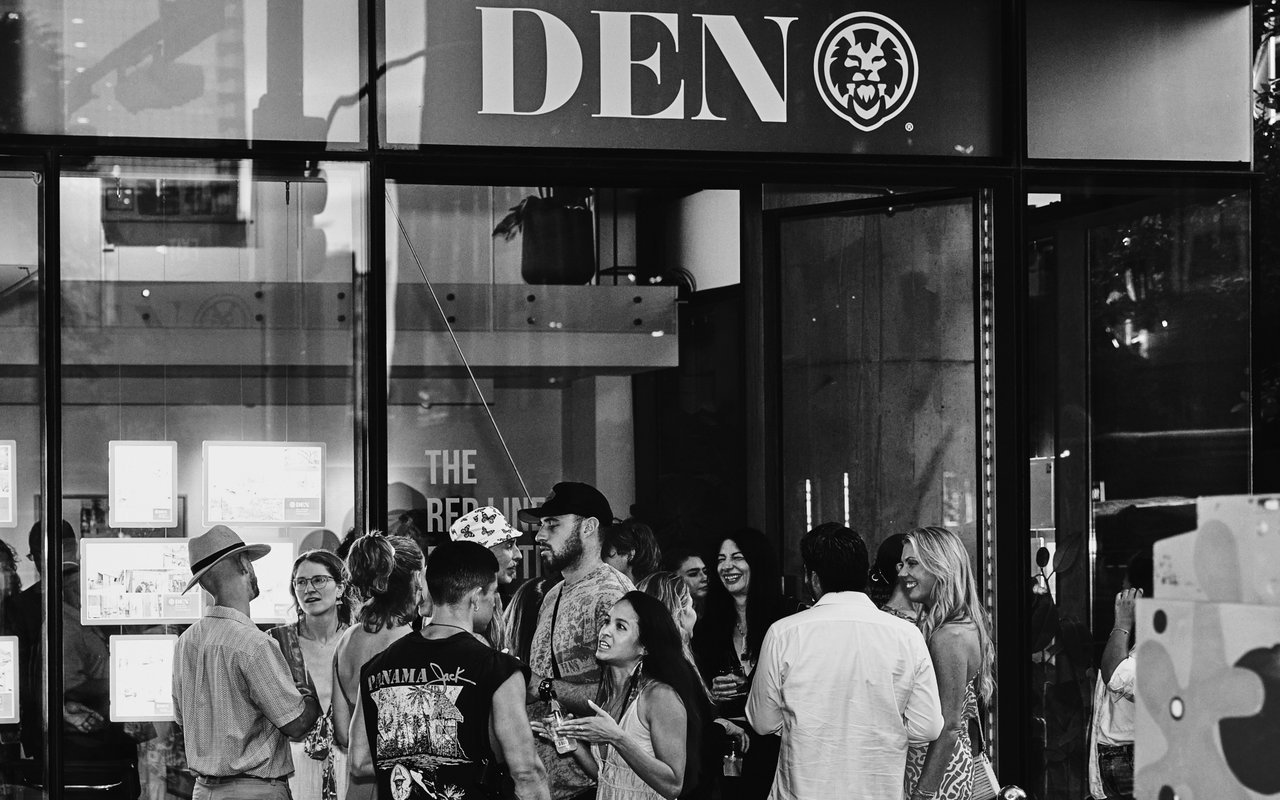
For a firm built on the idea that architecture shapes how a place actually lives, not just how it photographs, DEN Property Group keeps returning to stories like this one. A neighborhood's character rarely comes from what's currently open. It comes from what a place has quietly insisted its buildings keep doing, decade after decade, no matter who's holding the lease. Find Your DEN.®