
In 1943, thousands of service members and local Victory Hostesses came to Rosewood Park for dances, socials and gatherings. At the time it was one of the few places in Central Texas where Black troops could spend an evening off. So many people came that the park ran out of room. The following April a new building opened to hold them. A block east, a seven-year-old brick school was already teaching the neighborhood's children. Those two buildings have stood on Rosewood Avenue ever since.
In October 2026, both were formally recognized as history within seven days of each other. The recognition arrives just as their paths separate. The auditorium stays a free public room run by the City. The school is becoming a commercial campus with restaurants, shops and offices, and its target opening is fall 2027.
Seven Days in October
The dates matter because the two designations come from different authorities and mean different things.
| Date | What happened | Building |
|---|---|---|
| Nov. 2025 | City Council changes the land use from civic to mixed use, with a conditional overlay | Rosewood Elementary, 2406 Rosewood Ave. |
| May 16, 2026 | Texas State Board of Review approves the National Register nomination | Rosewood Elementary |
| Sept. 16, 2026 | City issues a building permit for remodel, change of use and addition | Rosewood Elementary |
| Oct. 8, 2026 | City Council designates a City of Austin historic landmark | Doris Miller Auditorium, 2300 Rosewood Ave. |
| Oct. 15, 2026 | National Park Service lists it on the National Register of Historic Places | Rosewood Elementary |
The auditorium's local landmark designation comes from City Council, and the building stays under Austin Parks and Recreation. The school's listing appears on the National Park Service's weekly list for Oct. 16, which records Rosewood Elementary School at 2406 Rosewood Avenue as "LISTED, 10/15/2026." Both honors recognize the same history, a segregated East Austin that built its own public institutions. Where that history goes next differs for each building.
The Room Under the Wooden Arches
Rosewood Neighborhood Park opened in 1929 as Austin's only segregated park serving African Americans. By 1942, the City's Recreation Department was holding weekly dances and sports there for Black service members. The USO opened a dedicated recreation building on April 10, 1944. Later that year it was named for Doris "Dorie" Miller, a U.S. Navy cook from Waco and the first Black service member to receive the Navy Cross, which he earned for his heroism during the attack on Pearl Harbor.
The design shows in the building's shape. Architect J. Roy White spanned the auditorium with a semi-circular truss system of laminated-wood arches, framed the building in steel and clad it in yellow brick. A 1971 addition held memorabilia from the old L.C. Anderson High School after the City closed it. The wide arched roof covers one open floor, so the same room could host many different kinds of events.
And it did. From the 1940s into the early 1960s the auditorium was a stop on the Chitlin' Circuit, the network of venues that gave Black entertainers commercial acceptance and safety under Jim Crow. Nat King Cole, Louis Armstrong, Count Basie and Little Richard all played there. The City's account also lists arts and crafts fairs, livestock shows, Christmas pageants, basketball tournaments and political rallies on the same floor.
Austin Parks and Recreation Director Jesús Aguirre said in the City's release:
"The Doris Miller Auditorium was more than just a parks facility; it was a constant, welcoming anchor for East Austin's cultural and civic life... Doris Miller Auditorium has long been a cornerstone of community connection, and it continues to play a vital role in our contemporary park programming today."
The final clause of that quote is the important one for anyone who lives nearby. The landmark status recognizes a building that is still in daily use.
The Calendar at 2300 Rosewood
The City's facility page lists youth and adult sports, Notes 4 Notes and fitness programs at the auditorium. Most of the seasonal schedule runs through Delores Duffie Recreation Center, which the City's event pages also list at 2300 Rosewood Ave. Both facilities keep the same hours: Monday through Thursday 11 a.m. to 9 p.m., Friday 11 a.m. to 6 p.m., and closed on weekends.
The sixth annual Lisa's Fall Festival took place on Oct. 23, with free entry and parking, food, music and games. Here is what's left on the calendar this year:
- Totally Cool Totally Art, a digital art and animation program, runs through Dec. 9.
- Tiny Tots has two paid sessions, Nov. 3 to 19 and Dec. 1 to 10, each listed at $75.
- Thanksgiving Bingo Bash, Saturday, Nov. 14, 4 to 6 p.m., with refreshments, games, prizes and music.
- Annual Festival of Trees, Saturday, Dec. 12, 5 to 8 p.m., with decorated trees, holiday photo inflatables, hot chocolate, s'mores, arts and crafts, and a movie in the gym.
The City's registration system shows both holiday events as free. The event pages are the best place to confirm details before you walk over. A Christmas gathering on this block in December follows a long tradition, since the City's history names holiday events and Christmas pageants among the auditorium's regular uses.
A Block East, a School Becomes a Campus
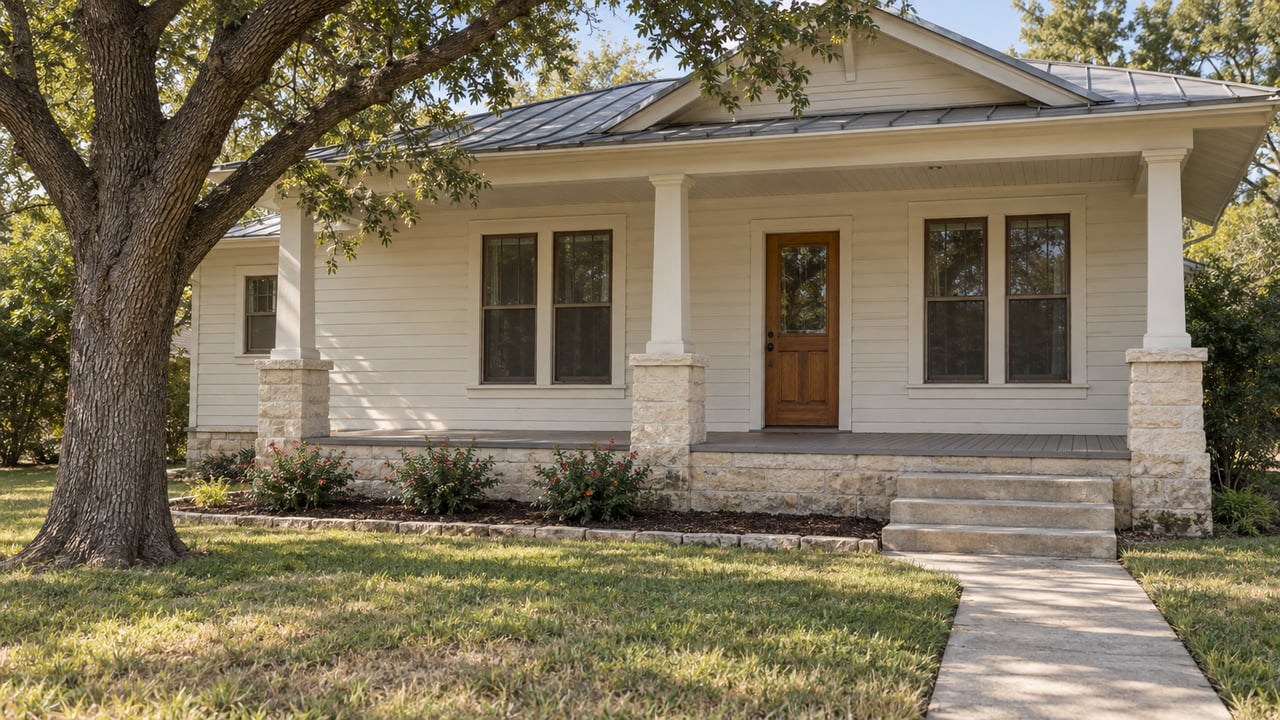
Rosewood Elementary opened in 1936 as a segregated public school for Black children. Additions in 1939, 1951 and 1956 created the connected, midcentury campus that still stands. My Neighborhood News cited the project brochure on Principal F.R. Rice, who secured federal improvement funding, started a library program, and helped provide meals to about 90 students a day during the Great Depression.
Its next use is commercial and privately funded. Topo Development Group plans an estimated $9.5 million adaptive reuse called Rosewood Hall, designed by Michael Hsu Office of Architecture. The plan renovates the historic buildings and adds a three-story, 1,295-square-foot structure, for about 36,068 square feet of improved space. Preliminary leasing plans show 16 suites ranging from about 473 to 3,761 square feet. Planned uses include food and beverage, retail, flexible commercial space, offices and a commercial kitchen, and some restaurant spaces would be delivered turnkey. Marketing materials describe 3.15 acres with 71 planned parking spaces, along with covered walkways and mature heritage trees that the design intends to keep.
Those suite sizes describe the kind of street Rosewood Avenue could become. The smallest suite, at 473 square feet, is about the size of a coffee counter or a small shop, and the largest, at 3,761 square feet, could hold a full restaurant. Spread sixteen of them across buildings from four construction phases in the 1930s and 1950s and you get a small district instead of a single big retail anchor.
The paperwork describes a 2027 timeline. The City issued building permit 2026-121814 BP on Sept. 16, 2026, for a 34,773-square-foot interior remodel, change of use and addition, and the City's dataset lists it as active. The project's state filing with TDLR projects work from Oct. 1, 2026, to Sept. 1, 2027, and lists the tenant as "Not Assigned." Marketing materials have aimed for tenant availability around September 2027, and individual businesses could open later than that. The old school will be a construction site for most of the coming year.
What the Rezoning Kept Off the Block
The land use change approved in November 2025 came with conditions. It allows commercial services and mixed uses but prohibits several automotive, entertainment, parking and pet-related businesses. My Neighborhood News reported that some neighbors asked for more commitments on historic preservation, traffic and the types of business that could operate on the site before the vote.
Those conditions keep the campus close to its original role as a daytime neighborhood place. An all-day, multi-use room like that already exists farther west on the same avenue. Rosewood Social Club opened at 1309 Rosewood Ave. in the former Saddle Up and Micklethwait BBQ space. The Austin Chronicle's June review described it as a coffee shop, remote-work spot, family hangout, cocktail bar and restaurant in one. According to its website, it opens every day at 9 a.m. and closes at 9 p.m. Sunday through Thursday and 10 p.m. on Friday and Saturday. Most weekends the recreation center is closed, and on those days the club is the avenue's open room.
By late 2027, the stretch from 1309 to 2406 Rosewood could have three kinds of gathering places. The privately run café and bar would already be open. The City's auditorium would still host Bingo Bash and the Festival of Trees under a landmark designation. And 16 suites would operate inside a school that is now on the National Register. The two designations honor the buildings and their history. How much of the new campus feels as open as the park building has for 82 years depends on which tenants sign the leases, and none have been named.
At DEN Property Group, we follow how Austin's historic buildings take on new uses, from a 1936 schoolhouse becoming a set of storefronts to a 1944 auditorium still filling its floor every December. If you live near Rosewood Avenue and want to understand what these changes mean for your block, we would be glad to talk it through. Find Your DEN.®