
Walk Duval Street between 42nd and 45th on any weekday evening and you'll pass a converted 1920s filling station now selling craft beer under a canopy of international flags, a wood-frame bungalow with a giant fork bolted to its roofline, and a squat commercial box that is about to host its third restaurant identity in seven years. None of these buildings are new. None of them are going anywhere. What keeps changing is who's inside them.
That distinction matters more than it sounds like it should, because 2026 has been a busy year for turnover on this particular stretch. A sushi bar is replacing an Italian café that replaced an upscale Italian restaurant. A 43-year-old institution just changed owners for the first time in its history. And the neighborhood's specialty grocer just rewrote its own restaurant concept without moving an inch. Read separately, these look like three unrelated business stories. Read together, they explain something specific about how Hyde Park absorbs change that doesn't show up in a lot of other fast-growing parts of Austin.
The Address That Keeps Getting Reused
Start at 4222 Duval St, a small building that, once its new tenant opens this fall, will have hosted three restaurant identities since 2019. Chef Nic Yanes opened it as a reimagined version of his upscale Italian restaurant Juniper, in partnership with Travis Tober of East Austin bar Nickel City and Brandon and Zane Hunt of pizzeria Via313. It became Uncle Nicky's Italian Specialties, a café serving pasta, sandwiches and cocktails. The Hyde Park location closed for good on April 26, 2026, with the team posting that the concept had grown "bigger than we meant them to" and that they wanted to get back to something smaller.
The space didn't sit empty for long. Ryan and Wade McElroy, brothers with deep ties to the Austin restaurant scene, are opening Kōbō sushi bar in the same building this fall, working with chef Moto Seto on his first solo restaurant. Wade already co-owns Rocco's Italian on nearby Airport Boulevard and opened Kinsho on Rainey Street earlier this year. Ryan co-owns Bird Bird Biscuit. In a release announcing the project, Wade said the pick was deliberate: Hyde Park has strong Italian, Mexican, pizza and pastry options, but no serious sushi. Kōbō is meant to fill that specific gap, not compete with what's already there.
That's the pattern worth noticing. The new operators aren't scouting empty lots or building out new footprints. They're studying what a specific, small commercial building in a specific neighborhood is missing, then filling it. The building itself never gets bigger, torn down, or replaced with something denser. It just gets a new tenant with a sharper read on what the block actually needs.
Forty-Three Years, One Sale
A few doors down at 4206 Duval, Hyde Park Bar & Grill just went through its first ownership change since it opened in September 1982. Founder Bick Brown, whose menu of fries and chicken fried steak earned the restaurant a spot in Food Network's rankings of the country's best fries, sold the business in late 2025 to Brian and Angela Luke, a married couple who had previously owned Artemis Mediterranean Grill at the Hill Country Galleria in Bee Cave since 2019.
Brown told the Austin American-Statesman he'd been thinking about selling since early in the pandemic, and he was candid about what made the decision hard: "It's hard to create a value formula in this market. Austin has become so expensive." That's a specific tension for a restaurant that built its identity on staying affordable while operating inside one of the city's most desirable neighborhoods for four decades.
What the Lukes are doing with it says as much as the sale itself. Brian Luke, who grew up in Hawaii and has spent his career in restaurants, told the Statesman he has no plans to overhaul the formula that made the place work. The dining room will get gradual updates and a few menu edits, but prices are staying in the middle of the market and the giant fork sign isn't going anywhere. Luke said he wanted to preserve something that has survived while so much of Austin has been rebuilt.
Two different buildings, two different kinds of change: one replaces an entire concept inside the same walls, the other keeps the concept nearly identical while changing who signs the lease. Both leave the building itself untouched.
The Grocery Store That Rewrote Its Own Restaurant
The third thread is Tiny Grocer, which opened its Hyde Park location in 2023 inside a converted former post office on Speedway. Owner Steph Steele built a dinner-focused restaurant inside the store called Bureau de Poste, a nod to the building's postal history, alongside the market itself.
That restaurant is now becoming Tiny Grocer Café, a more casual, all-day concept with an updated patio that includes a children's play area. Steele isn't shutting anything down. She's converting it, the same way the Duval Street buildings keep getting converted rather than replaced. And she's doing it while simultaneously opening a third Tiny Grocer location in East Austin, at the former home of Longhorn Meat Market on Martin Luther King Jr. Boulevard, where chef Damien Brockway of Distant Relatives Barbecue is building out an in-house butcher shop and barbecue program.
That's a small but telling detail: the building didn't change; the restaurant concept did.
Why the Buildings Don't Move
None of this is really a story about restaurants. It's a story about what Hyde Park's commercial stock is built from and why that shapes how change happens here.
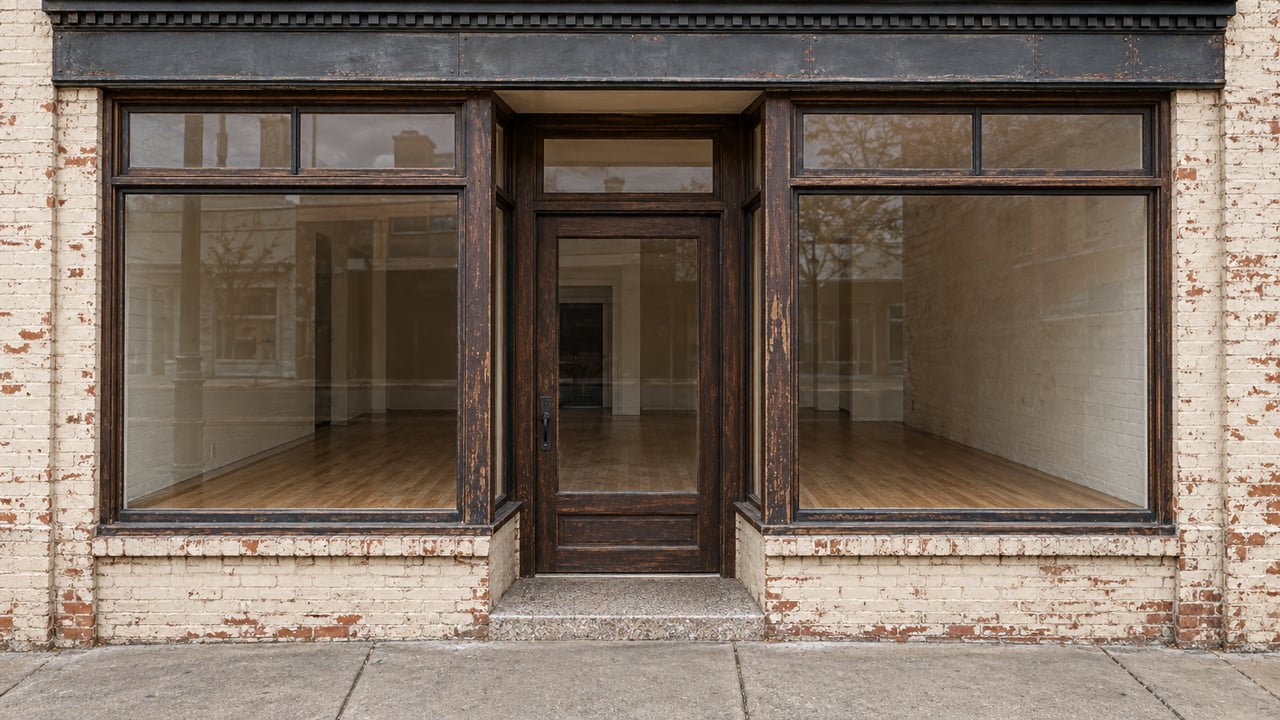
The Austin History Center's archive on Hyde Park notes that its early commercial buildings, like the Cash-Carry store and Duval Filling Station at 43rd and Duval, went up in the 1920s to serve a neighborhood that was still finding its shape as one of the city's first streetcar suburbs. Those buildings, and the small bungalow-scale structures around them, were never sized for the kind of ground-up redevelopment that reshapes commercial corridors in newer parts of Austin. A converted post office. A repurposed filling station now selling beer under flags. A midsize bungalow with a fork on the roof. These are fixed, small, particular spaces, and there are only so many of them.
That scarcity changes the economics of who moves in. An operator who wants to open in Hyde Park isn't choosing between five identical strip retail bays. They're choosing to inherit a specific building with a specific history and a specific size, and making their concept fit inside it. Wade McElroy didn't design Kōbō around an ideal restaurant format and then look for square footage to match. He looked at what Hyde Park already had, decided sushi was the gap, and built the concept to fit inside the walls Uncle Nicky's left behind. Brian and Angela Luke took over Hyde Park Bar & Grill, a restaurant with a format that already worked and a building with four decades of goodwill built into it. Steph Steele kept her Hyde Park store open and reworked what was happening inside the same four walls.
Compare that to how turnover typically works in parts of Austin built more recently, where restaurant spaces are often purpose-built shells inside larger mixed-use developments, sized and finished to whatever the incoming tenant's concept requires. In Hyde Park, the building is the constant and the concept is the variable. That's a meaningfully different kind of neighborhood commercial turnover, and it's the reason a walk down Duval Street can feel both busy with change and completely recognizable at the same time.
What That Means for This Fall
For anyone walking Duval Street this season, the practical texture is straightforward. Kōbō is expected to open at 4222 Duval sometime this fall, in the space long-time regulars still associate with Juniper's original run. Hyde Park Bar & Grill is open under its new owners with the same menu and the same fork sign out front. Tiny Grocer's Speedway location is running its new all-day café format, patio play area included, while the East Austin build-out continues.
A few blocks over, the neighborhood's other seasonal rhythms are running on their usual clock. The Hyde Park Farmers' Market on the Square operates Sundays from 9:30 a.m. to 1 p.m., in season from the second weekend of May through the end of October, with one break each year for the Hyde Park Art Show. Shipe Pool, built in 1934 with $1,500 in materials and Depression-era relief labor, has already closed for the winter and won't reopen until next summer, though Friends of Shipe Park continues its usual run of volunteer cleanups and advocacy work in the off-season.
None of that changes because a sushi bar is replacing an Italian café four blocks away. That's the point. Hyde Park's commercial turnover happens inside a fixed set of buildings that have outlasted every business that's occupied them, which is exactly why the neighborhood can absorb these business changes and still feel like the same place it was in April.
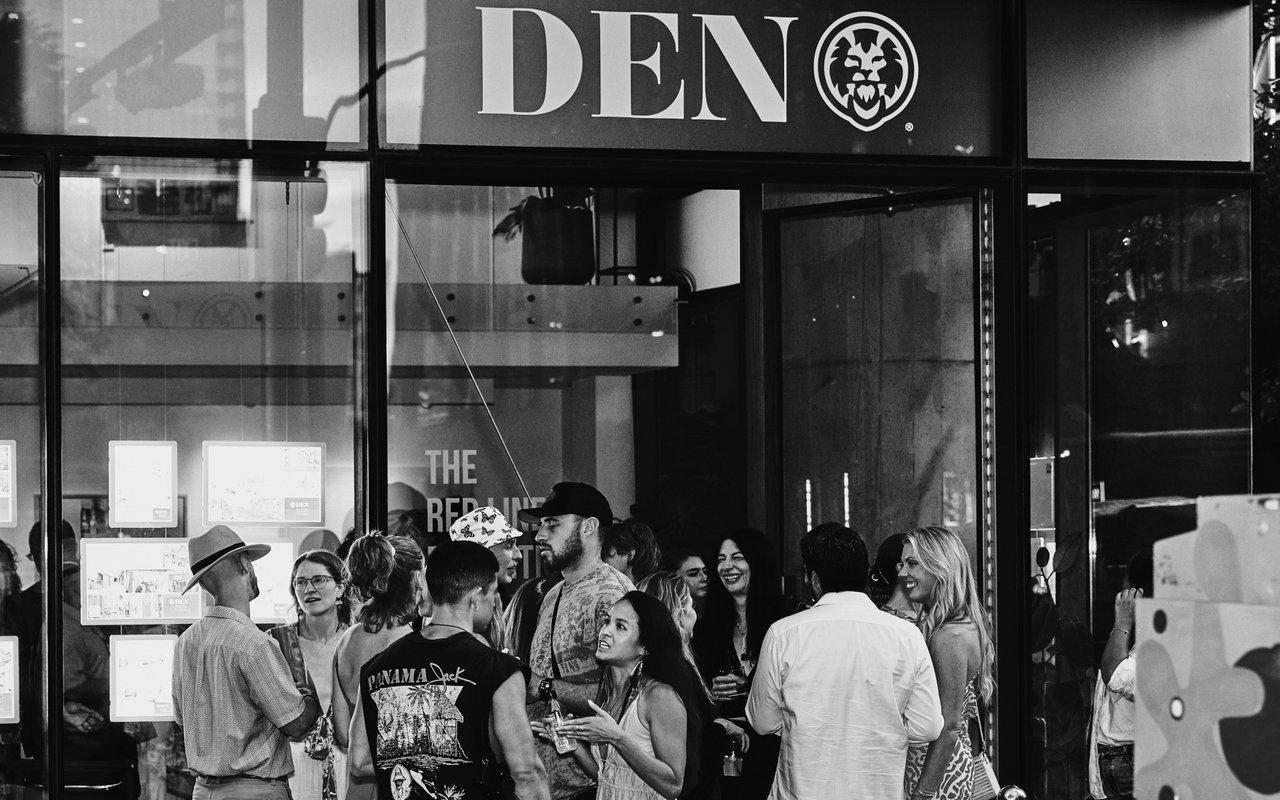
If the way a building holds onto its character while everything inside it changes is the kind of detail that makes you look at a neighborhood differently, that's the same lens we bring to every property we represent. DEN Property Group spends as much time reading what a building's bones say about a neighborhood as we do reading comps. Find Your DEN.®