

By DEN Property Group
Central Austin is one of the few parts of the city where a single afternoon can take you from pink granite government buildings to an Italianate villa above Lake Austin and then on to a nineteenth-century house museum near the university. The Texas State Capitol remains a National Historic Landmark, the UT Tower still anchors the skyline from the Forty Acres, and places like Laguna Gloria, Mayfield Park, and the Neill-Cochran House preserve a much older layer of Austin's design story.
These landmarks help explain why this part of Austin continues to carry so much visual identity even as the city grows taller around it.
Key Takeaways
-
Capitol: Pink granite and civic scale define the core.
-
UT Tower: A 307-foot Beaux-Arts skyline landmark completed in 1937.
-
Historic houses: Older residences reveal Austin's earliest design language.
-
Lake Austin edge: Villas and garden estates add another architectural layer.
The Texas State Capitol Still Defines Austin's Civic Image
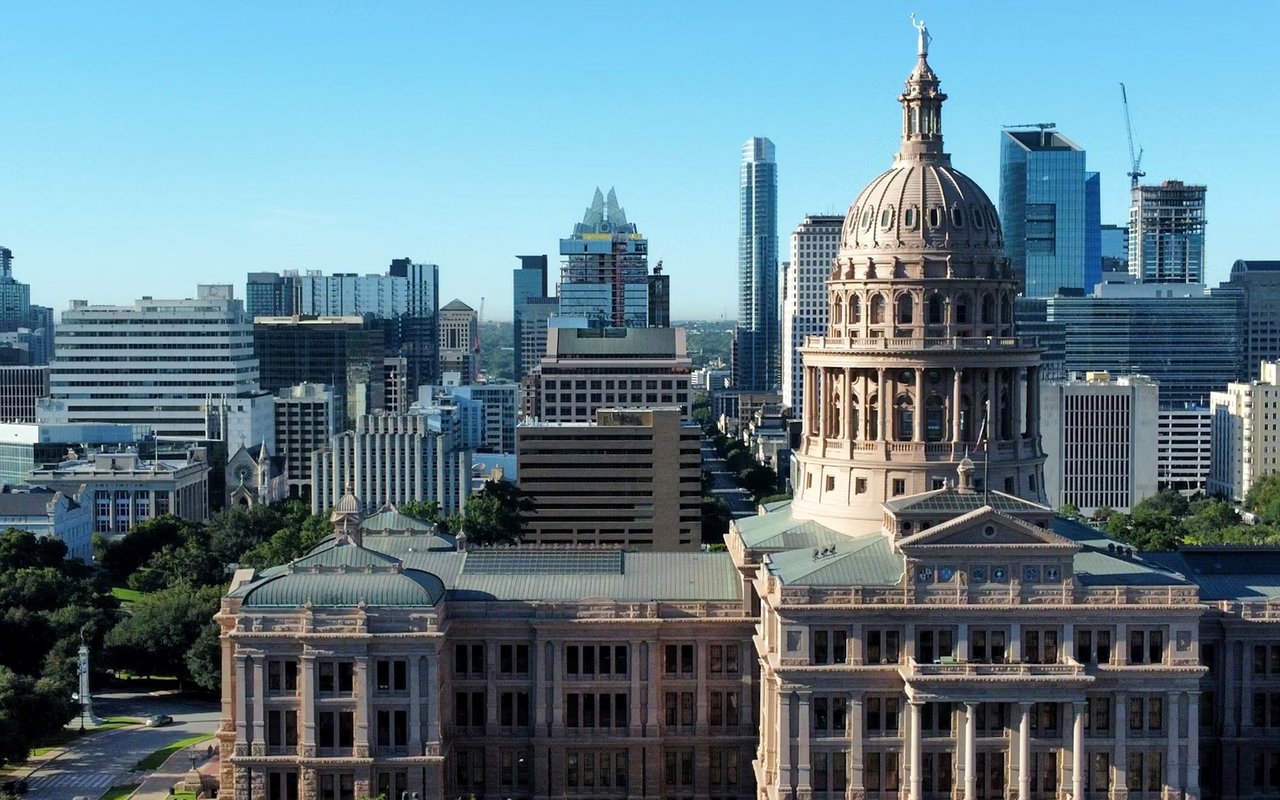
The Texas State Capitol remains the most dominant public building in Central Austin, and its scale continues to organize the visual hierarchy of downtown and the northern edge of the core.
Why the Capitol remains essential
-
National landmark status: The State Preservation Board notes that the Capitol is on the National Register of Historic Places and was designated a National Historic Landmark in 1986.
-
Material identity: The building is widely recognized for its pink granite exterior and monumental dome, which stands 14 feet taller than the U.S. Capitol in Washington, D.C.
-
Visitor relevance: Free tours, public grounds, and the Capitol Visitors Center keep the landmark actively woven into daily city life.
This building gives Austin a sense of permanence while changing the real estate conversation in nearby neighborhoods, where view corridors, walkability, and proximity to the Capitol complex continue to influence how central properties are experienced.
The UT Tower Gives Central Austin Its Academic Landmark
The University of Texas Tower remains one of the city's most recognizable vertical landmarks, and it still reads as a visual anchor for the campus and the surrounding neighborhoods.
What stands out about the Tower
-
Historic role: Designed by architect Paul Philippe Cret and completed in 1937, the 307-foot, 27-floor tower has served as the heart of UT's campus for nearly nine decades.
-
Architectural prominence: Built in the Beaux-Arts style, the Main Building and Tower were designed to serve as the major vertical landmark of the Forty Acres.
-
Lighted tradition: The Tower's lighting system continues to connect architecture with campus ritual and public celebration.
We like to include it because the building ties architecture, civic memory, and the broader identity of Central Austin together in a way that feels unmistakable from Guadalupe Street to Dean Keeton.
Historic House Museums Show Austin Before the High-Rise Era
Some of the most revealing architectural landmarks in Central Austin are former residences, because they preserve the scale and construction language of the city before modern growth changed the skyline.
Two historic homes that still shape the story
-
Neill-Cochran House Museum: Built in 1855–1856 by master builder Abner Cook in the Greek Revival style, the museum stewards one of Austin's oldest residences, near the UT campus, and was added to the National Register of Historic Places in 1970.
-
Mayfield Park Cottage: The cottage core dates to the 1870s; Texas Secretary of State Allison Mayfield purchased it in 1909, and his daughter and son-in-law expanded it in 1922 into the walled botanical garden estate visitors see today.
-
National Register status: The Mayfield–Gutsch Estate was added to the National Register of Historic Places on September 29, 1994.
These places help explain why neighborhoods like Pemberton Heights, Old Enfield, and the western residential edges of Central Austin still draw so much attention for houses with proportion, material warmth, and a stronger historical feel.
Laguna Gloria Adds a More Romantic Layer to the Architectural Map
Laguna Gloria brings an entirely different architectural mood to Central Austin, with its waterfront villa and museum grounds above Lake Austin.
Why Laguna Gloria feels so distinctive
-
Historic villa: The Driscoll Villa was built in 1916 for Clara Driscoll — the same Clara Driscoll celebrated for saving the Alamo from commercial development — and was designed by San Antonio architect Harvey L. Page in an Italian/Mediterranean style.
-
Waterfront setting: The property sits directly on Lake Austin, which gives the architecture a far more scenic and estate-like character.
-
Design contrast: The villa stands apart from downtown landmarks through its more residential and ornamental form, and it was added to the National Register of Historic Places in 1975.
Laguna Gloria matters because it broadens the definition of what counts as a landmark in this part of the city.
The Driskill Connects Central Austin to Its Historic Luxury Identity
The Driskill sits farther into downtown than some of the residential landmarks, though it still belongs in any Central Austin architecture conversation because it remains one of the city's signature historic buildings.
What keeps The Driskill so relevant
-
Historic status: Completed in 1886 for cattle baron Jesse Driskill in the Romanesque Revival style, the hotel was added to the National Register of Historic Places in 1969 and remains the oldest continuously operating hotel in Austin.
-
Downtown location: Its corner at Brazos and 6th places it at one of the city's classic intersections.
-
Continued use: The Driskill still operates as a working hotel, which keeps the landmark active rather than purely commemorative.
That continued use gives the building a different kind of architectural power, because people experience it as part of the city rather than only as a preserved artifact.
FAQs
Which landmark best represents Austin's civic architecture?
The Texas State Capitol is the clearest answer because it dominates the civic core and remains one of the state's most recognized public buildings. Its materials, scale, and position at the head of Congress Avenue give it an exceptional presence.
Which landmark feels most tied to the university area?
The UT Tower stands out in that role because it anchors the campus visually and remains one of the strongest skyline markers north of downtown.
Are Central Austin's best landmarks all large public buildings?
No, and that contrast is part of what makes the area so interesting. House museums like the Neill-Cochran House and estate properties like Laguna Gloria and Mayfield Park reveal a more intimate side of the city's architectural history.
Contact DEN Property Group Today
Reach out to us at DEN Property Group, and we will help you compare neighborhoods through that lens, whether you are drawn to the institutional grandeur around the Capitol, the historic residential feel of Old West Austin, or the quieter luxury streets near West Austin and Pemberton Heights.